
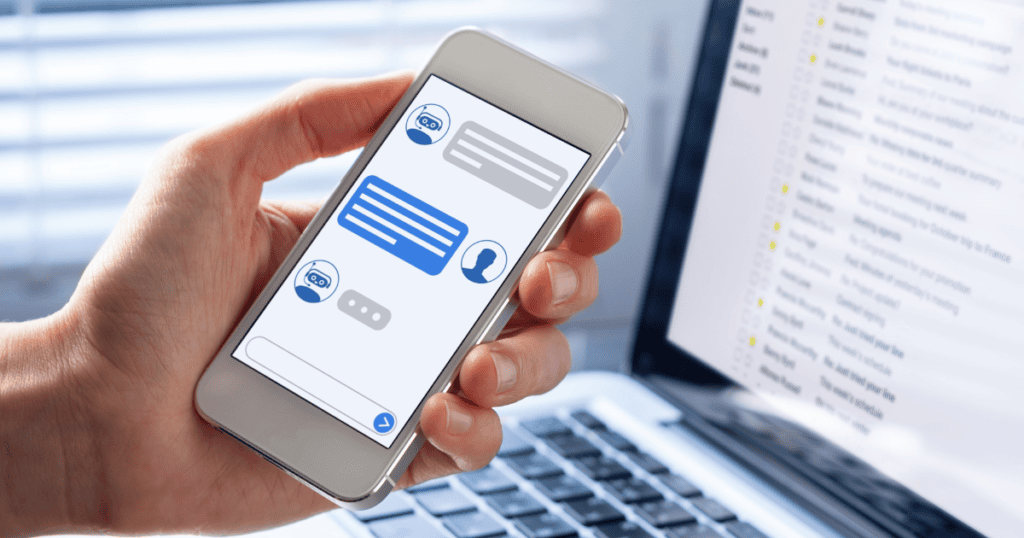
Most people turn to AI for coaching because it’s convenient, not because they undervalue human connection. They turn to it because it’s there, at midnight, on a bad day, or in the middle of a decision they can’t stop thinking about. AI-powered coaching (or AI coaching in short) has become a normal part of how people set goals, sort through their thoughts, and try to build better habits.
But being available isn’t the same as being enough. AI coaching and human coaching aren’t really a competition between two versions of the same thing. They help with different problems in different ways.
AI can support reflection and planning. But it doesn’t always lead to lasting change. That requires someone who can listen closely, use their intuition, and build a real connection with you.
This article looks at why AI coaching has become popular, where it tends to fall short, and when working with a human coach is likely to make the bigger difference for you.
Key takeaways:
- AI is useful for quick and organised support, such as setting goals or giving reminders.
- An AI coach cannot notice your tone, body language, or things you leave unsaid.
- A human coach can notice patterns that you may not see, such as why you keep facing the same problem.
- Real accountability comes from a real person who understands your goals and why they truly matter, not just from an app that sends reminders.
Why AI Coaching Is Becoming Popular
AI coaching makes support feel closer at hand. You can use it late at night, on your lunch break, or the moment a worrying thought pops up. It can help you turn something overwhelming like “I want to feel less stressed” into smaller actions such as planning breaks or practising a hard conversation before you have it.
It’s also good at structured tasks. AI in coaching can generate reflection questions, flag possible barriers, and remind you of goals you’ve already set. If you’re not sure coaching is right for you yet, AI coaching gives you a low-pressure way to start reflecting. It might help you find the words for what you’re going through, before you ever sit down with a human coach.
Where AI Coaching Has Its Limits
AI Only Knows What You Type, Not Your Full Context
AI in coaching works best for structure, not depth. AI may know you’re struggling to stay productive at work but there are things it won’t know about you. Maybe you’re caring for an unwell parent, dealing with conflict at home, or carrying a fear of failure that began years ago. It can only understand these things if you choose to share them and explain why they matter.
Even then, AI may not fully grasp how your culture, relationships, finances, health, or personal history shape the issue. The American Psychological Association (APA) notes that AI systems can lack the contextual understanding and judgement needed for complex mental health-related support.
Also, an AI coach tends to agree with you too easily, validating a distorted thought instead of pushing back on it, which a good human coach would do. So be cautious when you interpret AI coaching responses and apply with discretion and careful judgement.
AI May Not Notice When You’re Avoiding the Real Issue
We often focus on the problem that feels easiest to talk about. You might say you need better time management when the real issue is perfectionism, burnout, or a fear of letting people down. An AI coach can ask follow-up questions, but it usually works within the direction you give it – which influences the coaching advice it generates.
AI May Not Know When a Conversation Needs to Go Deeper
Some problems can be solved with a quick suggestion. Others need time, reflection, and back-and-forth conversation. If you’re rebuilding confidence after a setback, making a difficult career decision, or dealing with a recurring relationship problem, the right approach may not be obvious from the start.
This is where AI coaching and human coaching differ in practice. AI can support reflection and planning. A human life coach or career coach can help you explore what’s underneath the surface, gently challenge assumptions with care, and support you as you unpack your thoughts and feelings. Whereas an AI coach wouldn’t be able to go as deep even if you were to share more comprehensive information about your context and inner thoughts with it.
What a Human Coach Can Do That AI Cannot Easily Replicate

A Human Coach Can Notice Your Tone, Facial Expressions and Body Language
Someone may say, “I’m fine with the decision,” while speaking more quietly, avoiding eye contact, or tensing up. A human coach may catch that mismatch and gently reflect it back: “You said you’re fine with it, but I noticed you paused. What’s coming up for you?”
These small signals can reveal uncertainty, grief, frustration, or self-doubt that might never show up in a text-based chat. The APA points to tone of voice, cadence, facial expressions, and body language as important cues that many AI systems simply miss. This kind of human connection in coaching is hard to replicate, and even harder to automate.
A Human Coach Can Know When to Push and When to Pause
A real breakthrough isn’t always a dramatic realisation. Sometimes it’s the quiet moment someone feels safe enough to say, “I don’t actually want this goal,” or “I’m afraid I’ll fail again.”
A human coach can decide whether to ask a more challenging question, sit with a pause, or slow things down. This judgement depends on the person, the relationship, and the emotional moment. This is not something that you can easily achieve through an AI response.
A Human Coach Can Help You Recognise Patterns You Keep Repeating
Most people already know what they “should” do. The harder part is understanding why they keep getting stuck with the same problem.
For example, you may keep agreeing to extra work, then feel overwhelmed and frustrated about it. A human coach can help you look beyond the situation: What makes saying ‘no’ difficult? What belief is driving the pattern? What could a different response look like next time?
This is where coaching becomes less about advice and more about insight. The goal isn’t for the coach to tell you who you are. It’s to help you notice your own patterns and choose how you respond to them.
A Human Coach Can Hold You Accountable for the Changes You Want to Make
AI can send reminders, track habits, and ask if you have completed a task. But, human accountability feels different, because another person actually remembers your intention, understands your context, and can explore what happened without turning a missed goal into a failure.
For example, instead of AI just asking whether you exercised three times this week, a coach might ask what changed when you didn’t. The answer could reveal something practical, like an overloaded schedule, or something deeper, like feeling undeserving of time for yourself.
When Human Coaching Can Lead to Deeper Breakthroughs
When You’re Dealing with a Difficult or Sensitive Issue
Human coaching can help when you’re facing bigger issues that involve identity, confidence, career uncertainty, relationships, or a major life transition. These issues often carry emotions and experiences that are hard for AI to sense or empathise with.
If you’re experiencing severe distress, thoughts of self-harm, or mental health concerns that affect daily life, a human coach will advise or refer you to the right support from a mental health professional. This is something that AI isn’t well-equipped to do yet.
When You Know What to Do but Still Struggle to Take Action
You may know that rest, boundaries, or preparation would help, and still find yourself stuck anyway. A human coach can help you understand the gap between intention and action. Instead of giving another productivity tip, they may help you understand what’s actually making the change hard, what support you need, and what a realistic next step looks like for you.
When You Keep Facing the Same Problem
Repeated problems are often worth a closer look. If you often procrastinate, take on too much, give up on your goals, or have the same kinds of conflicts, a human coach can help you understand and confront the pattern behind them.
That doesn’t mean that every recurring problem has one hidden reason behind it. But having a real conversation with a human coach can give you space to explore what’s happening and notice things that may not become clear in just one conversation.
AI Coaching vs Human Coaching
|
Area |
AI coaching |
Human coaching |
|
Availability |
Available any time, responds instantly |
Needs scheduling, but gives you dedicated human attention |
|
Best for |
Goal setting, journalling prompts, planning and habit reminders |
Complex decisions, recurring patterns, confidence and behaviour change |
|
Understanding context |
Relies mainly on what you tell it |
Can ask questions, notice nuance and build understanding over time |
|
Non-verbal communication |
Often limited, especially in text-based tools |
Can notice tone, pauses, facial expressions and body language |
|
Accountability |
Can track goals and send reminders |
Can explore barriers, challenge assumptions, and adapt coaching support to your needs |
Conclusion
AI coaching can be a genuinely useful tool for reflection, planning, and everyday motivation. It makes support more available, especially when you just need a quick way to organise your thoughts or take a first step.
But deeper breakthroughs usually need more than the right advice. They need to be heard, challenged with care, and supported through the uncomfortable parts of change. Knowing the difference between AI coaching and human coaching helps you know when each one serves you. AI can help you start the reflection. A human coach can help you stay with it long enough for something to shift meaningfully.
If you’re facing something that feels too big to sort out alone, explore our coaches and find the right human support for where you are right now. Start your coach matching journey today and take the next step with greater confidence.
Frequently Asked Questions
Is AI coaching a replacement for human coaching?
No. AI is useful for reflection prompts, planning, and reminders. It can’t read your tone, remember your history, or catch patterns you can’t see yourself. For anything beyond structured tasks, you still need a human.
When should I choose a human coach over an AI coach?
Choose humans for when you are faced with major life decisions, recurring patterns, or confidence issues that you want a professional coach to provide dedicated coaching attention and support your growth in an empathetic way. If you only want to focus on goal setting, journaling or passive accountability, use an AI coach instead. You can also complement human coaching with AI coaching if you feel that this set-up is supportive in achieving your goals.
What are the main limitations of AI coaching?
No reading on tone or body language, no human accountability. It also tends to agree with you too easily, validating a distorted thought instead of pushing back on it, which a good human coach will do.
How does accountability differ between AI and human coaching?
AI can log your goals and remind you about them. A human coach remembers why you set them, notices when you keep missing the same one, and asks what’s getting in the way, without turning a missed goal into a verdict on you. Human coaching is also more intentional, which often creates stronger lasting change than relying on AI coaching.